De klanken van het Nederlands
Master the Dutch sounds (yes, including THAT g) and read aloud with confidence.
Day 4 of 100 · Amsterdam
You can already open a conversation. From Day 1 you greet with hallo, goedemorgen, and the all-day dag. From Days 2 and 3 you name yourself with ik ben and ik heet, you conjugate zijn and heten, and you choose jij or u for the person in front of you. Today we slow right down and fix the one thing that makes all of it land as truly Dutch: the sounds themselves.
Lees deze woorden hardop
Before any rules, just try these out loud. They are packed with the sounds that make Dutch sound Dutch: goedemorgen (good morning), huis (house), ijs (ice, ice cream), ui (onion), meneer (sir), school (school), and acht (eight). Some will feel strange in your mouth, and that is exactly the point. By the end of today those same words will feel normal.
The five sounds that give a beginner away
- The g and ch are one throaty sound. Written /x/, it is made at the back of the throat, like a soft, dry gargle. You hear it in goed (good), acht (eight), and lachen (to laugh). This single sound is the most Dutch thing you will learn all week. Never swap it for an English hard "g".
- Long vowels are simply held longer. A doubled vowel is the long one, and the length carries the meaning: man (man) versus maan (moon), bom (bomb) versus boom (tree), zon (sun) versus zoon (son). Stretch the double, and keep the single one short and clipped.
- The signature diphthongs. ij and ei both sound like a tight English "eye" (mij, trein). ui has no English twin, a rounded sound you meet in huis and ui. eu is the rounded vowel in deur (door). oe is a plain "oo" as in goed and boek (book). au and ou match the English "ow" in koud (cold).
- Final devoicing. At the end of a word a d turns into a "t" and a b into a "p": hond (dog) sounds like "hont", and heb (have) sounds like "hep". The spelling keeps the soft letter, your mouth hardens it.
- Stress falls on the first syllable of most native words: GOE-de-mor-gen, SCHO-len. When in doubt, lean on the front of the word.
Here are four words spoken by native speakers. Play each one, then copy it straight back, chasing that throaty g in goedemorgen and the rounded ui in huis:
Vandaag: acht klankwoorden
Eight everyday words, chosen so each one drills a sound you just met. The hint shows how it lands in your mouth; the band shows how common the word is.
Hear it, mark it, say it
- Mark the throaty ones. Which of these carry the g/ch /x/ sound? dag, huis, acht, goed, boek, lachen, ijs. (Answer: dag, acht, goed, lachen.)
- Long or short? In each pair, which word has the long, held vowel? man / maan, bom / boom, zon / zoon. Say both out loud and exaggerate the difference. (The doubled one is long: maan, boom, zoon.)
- Harden the ending. Say these the Dutch way, devoicing the final letter: hond (to "hont"), heb (to "hep"), goed (to "goet"). Feel the soft letter turn hard right at the end.
- Read and record. Say this line aloud and record it: Ik heb een goed boek en acht euro. Play it back and check your g in goed and the devoiced endings of heb and goed.
Read this short passage out loud and record it on your phone. Then play it back with one ear on your g and one on your vowel lengths:
Goedemorgen! Ik ben Daan.
Ik woon in een oud huis met een rode deur.
Op school lees ik graag een goed boek.
En 's avonds eet ik graag ijs.
(Good morning! I am Daan. I live in an old house with a red door. At school I like to read a good book. And in the evening I like to eat ice cream.)
Check three things: the throaty g in goedemorgen, graag, and goed; the rounded ui in huis; and the long vowels in school and boek. Record it twice and keep the better take.
Here is the secret almost no beginner is told: two sounds do most of the work. Nail the throaty /x/ and truly hold your long vowels, and a Dutch ear suddenly places you as someone who is really learning, not just reciting. The learners who stay foreign are almost always the ones who soften the g into an English "g" and clip their long vowels short. Lean into the sound that feels the most awkward, because that is the one that carries the whole accent.
One language, two countries, and a giveaway g
Dutch is the mother tongue of around 25 million people, across the Netherlands and the northern half of Belgium, where it is often called Flemish. Its closest relative abroad is Afrikaans, spoken in South Africa and Namibia, which grew out of the Dutch that 17th-century settlers carried south. The g is a regional giveaway: soft and almost gentle in the south, hard and scraping in the north around Amsterdam.
The Bible that standardised the spelling
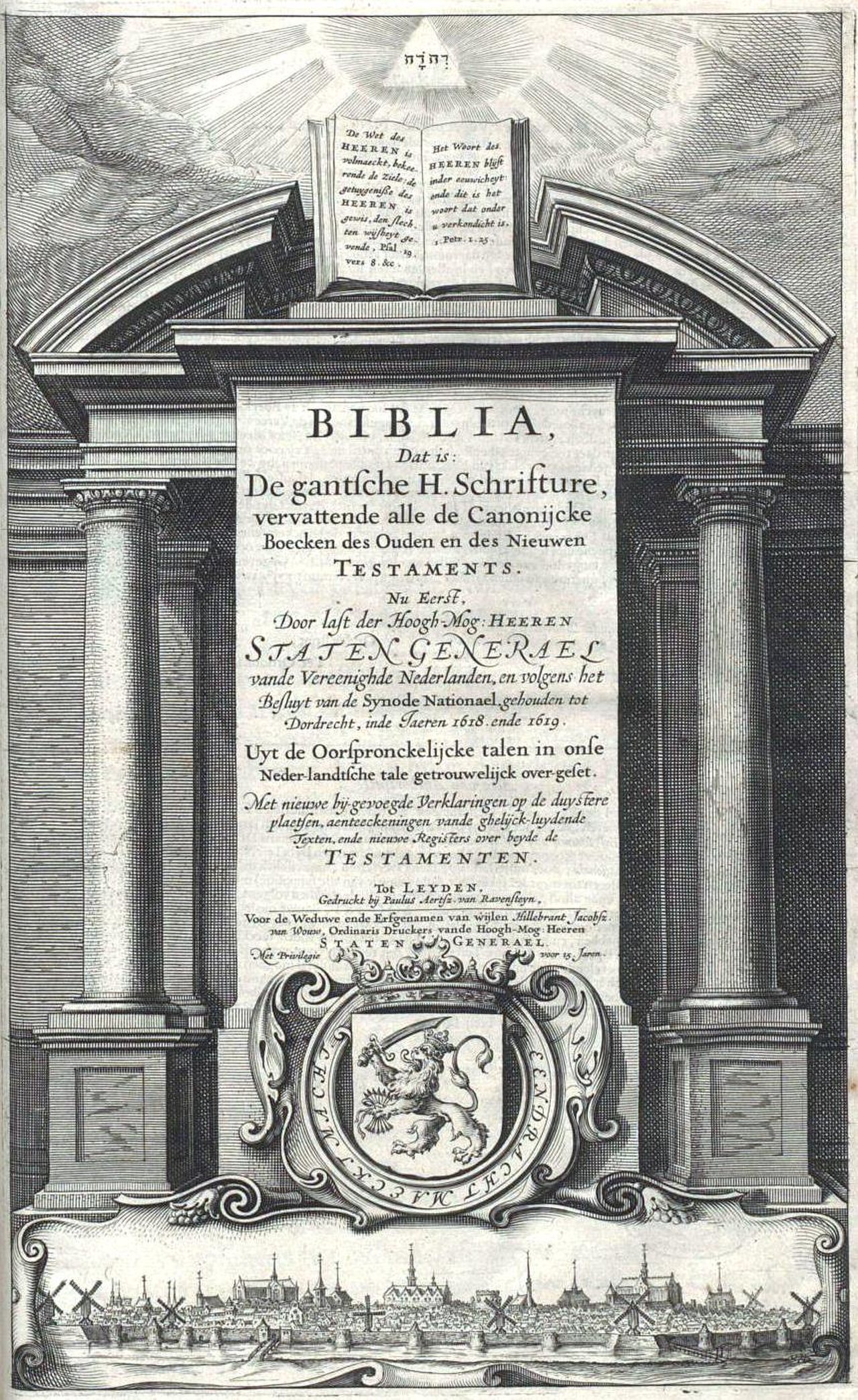
Standard written Dutch was shaped by the Statenvertaling, the States Bible finished in 1637. Printed for churches across all the provinces, it carried one shared spelling and grammar to readers who until then mostly wrote in their own regional dialects. It did for Dutch roughly what the King James Bible did for English, pulling a patchwork of local writing into a single national language.
- The Dutch g and ch are one throaty /x/ (goed, acht, lachen), the single sound that makes you sound Dutch.
- Doubled vowels are long and change the word: man vs maan, bom vs boom, zon vs zoon.
- Learn the diphthongs as a set: ij/ei ("eye"), ui (rounded, huis), eu (deur), oe ("oo", boek), au/ou ("ow", koud).
- Final devoicing: a final d sounds like "t" and a final b like "p", so hond is "hont" and heb is "hep".